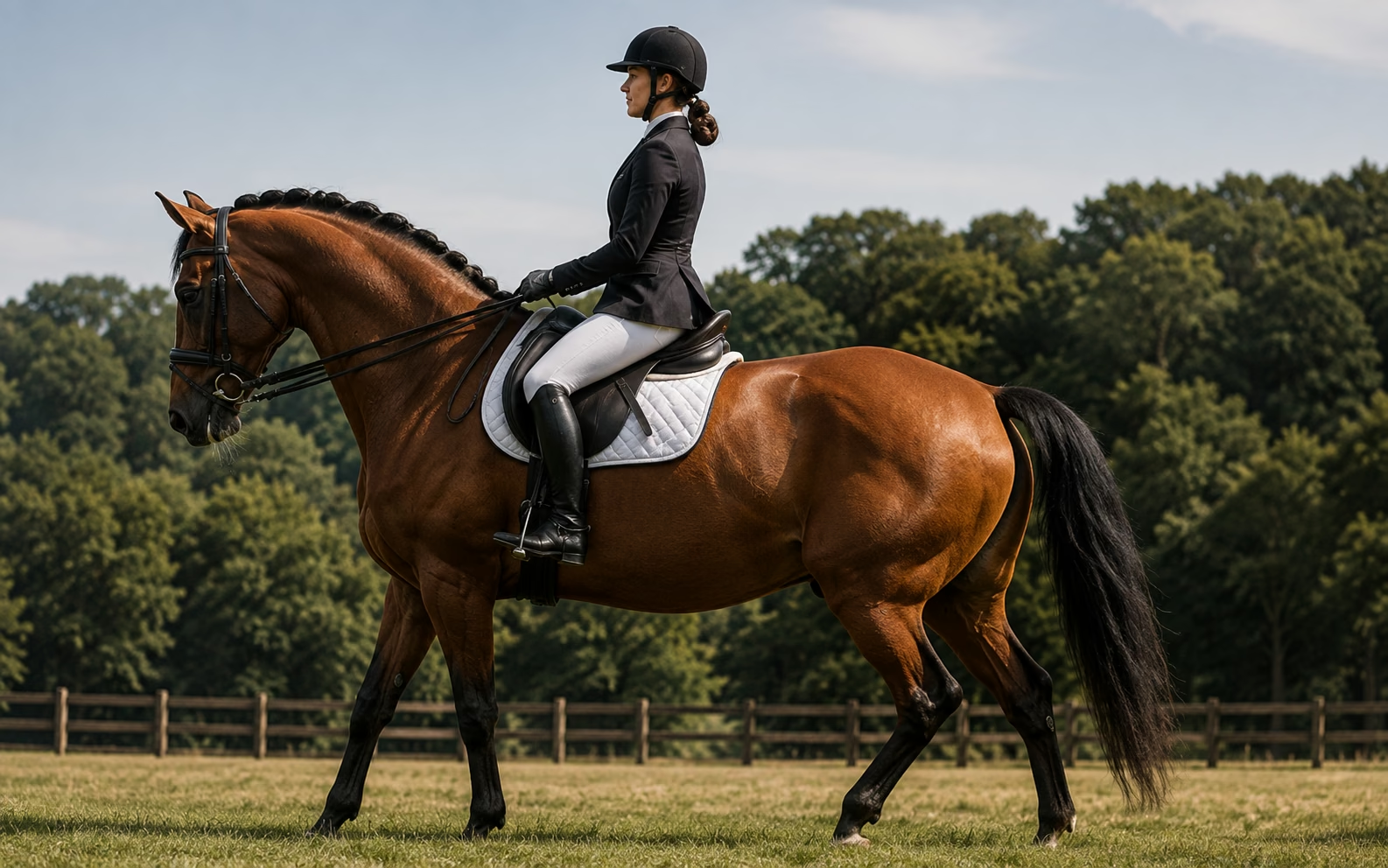
Time in the saddle develops sport-specific skill, but it may not address every physical demand that riding places on the body.
Stability is not the same as stiffness
A rider needs enough stability to maintain an organised position and enough mobility to follow the horse's movement. When the torso is rigid, movement is often transferred to the arms or legs. When control is insufficient, the position becomes unstable.
Symmetry can be trained
Differences between the left and right sides are common. The aim is not perfect symmetry, but reducing differences that interfere with control, breathing or the ability to maintain position.
Work capacity protects technique
Fatigue changes how a rider sits, breathes and applies aids. Conditioning should therefore develop the ability to maintain high-quality performance, not just maximal strength.
What to do next
Observe how abilities developed outside your main activity transfer into your everyday performance. Record your observations and use them as feedback for the next program adjustment.